
Our ears and hearing can change with time. About one-third of older adults may have age-related hearing loss.
Hearing loss can be caused by a number of different things, including changes in the structure of the ear as we age (our ears get bigger as we get older!), exposure to loud noises over a long period of time, medical conditions, or even medication side effects.
The organ of balance, known as the vestibular system, is found in our inner ear. The vestibular system sends signals to the brain and other organs like our eyes, joints and muscles to keep our balance. If you have ever been seasick, there is a miscommunication between these systems. As we age, the vestibular system has a slower reaction time and may affect our balance. Other things, such as inner ear infections, might also affect our balance, which can lead to falls.
It is important to talk to your provider about any symptoms you are having of hearing loss or any issues with your ears as soon as possible. The National Institute on Aging reports that hearing loss can increase the risk of falling. According to the Hearing Loss Association of America, people with hearing loss often wait 7-10 years before getting help! Research has shown that hearing loss is even connected with cognitive decline, dementia and Alzheimer’s, depression, anxiety, isolation, and more, all of which can increase our risk of falling.
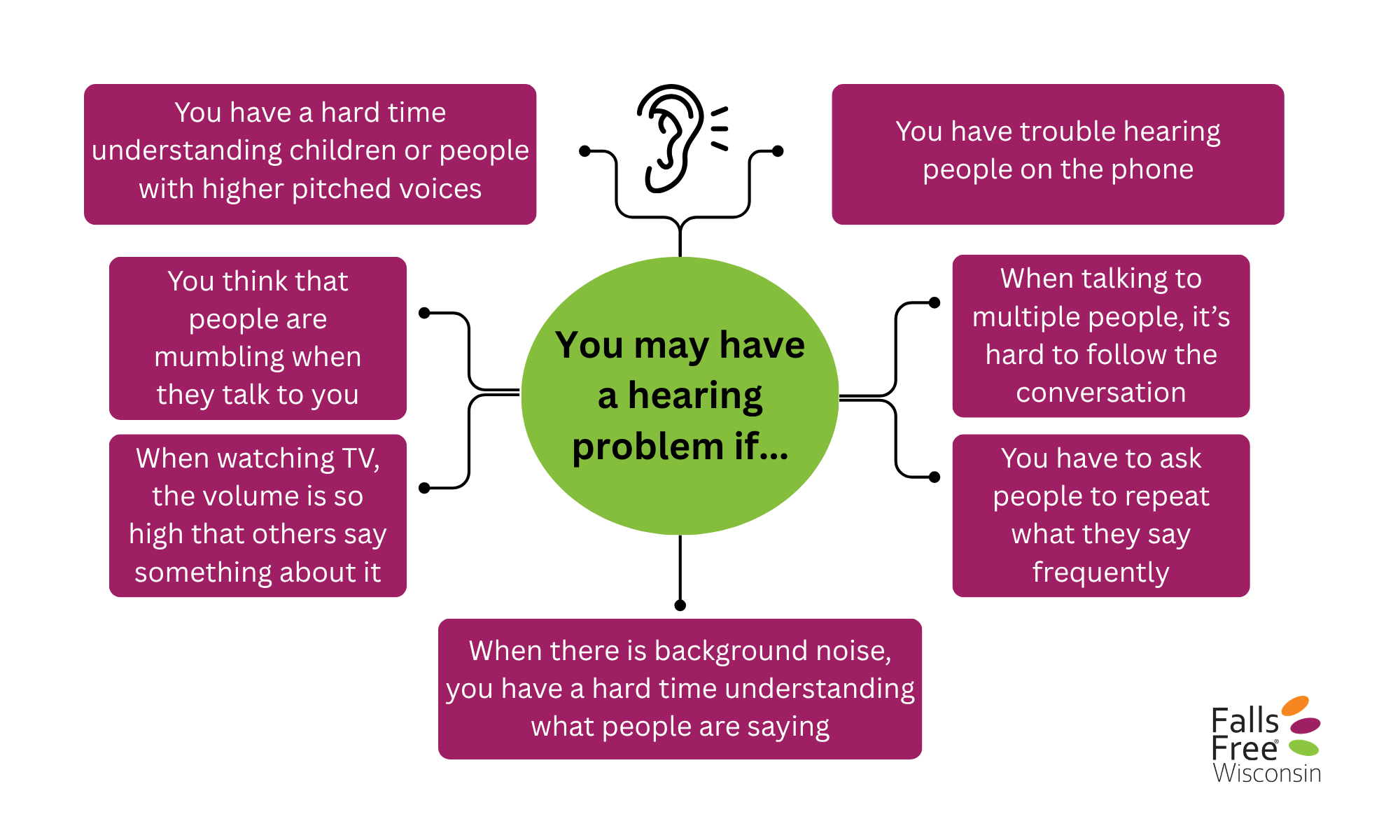
If any of the above are true, you may benefit from a hearing aid. Over-the-counter hearing aids are now available without a prescription! While not recommended for individuals with greater than mild-to-moderate levels of hearing loss, this is a convenient and affordable option. Talk with your provider about getting a hearing test once a year to detect any changes in hearing. Online hearing tests are also available.
Additional Resources:
Share this page’s information with others via the page download: