
Opportunities to make an impact
By looking at the data, we can get a better understanding of the impact of falls nationwide, in Wisconsin, and our local area, and make the case for effective fall prevention efforts. Data shows us that falls are happening frequently, they are expensive and they have enormous health and community implications.
A look at Wisconsin from 2019-2024
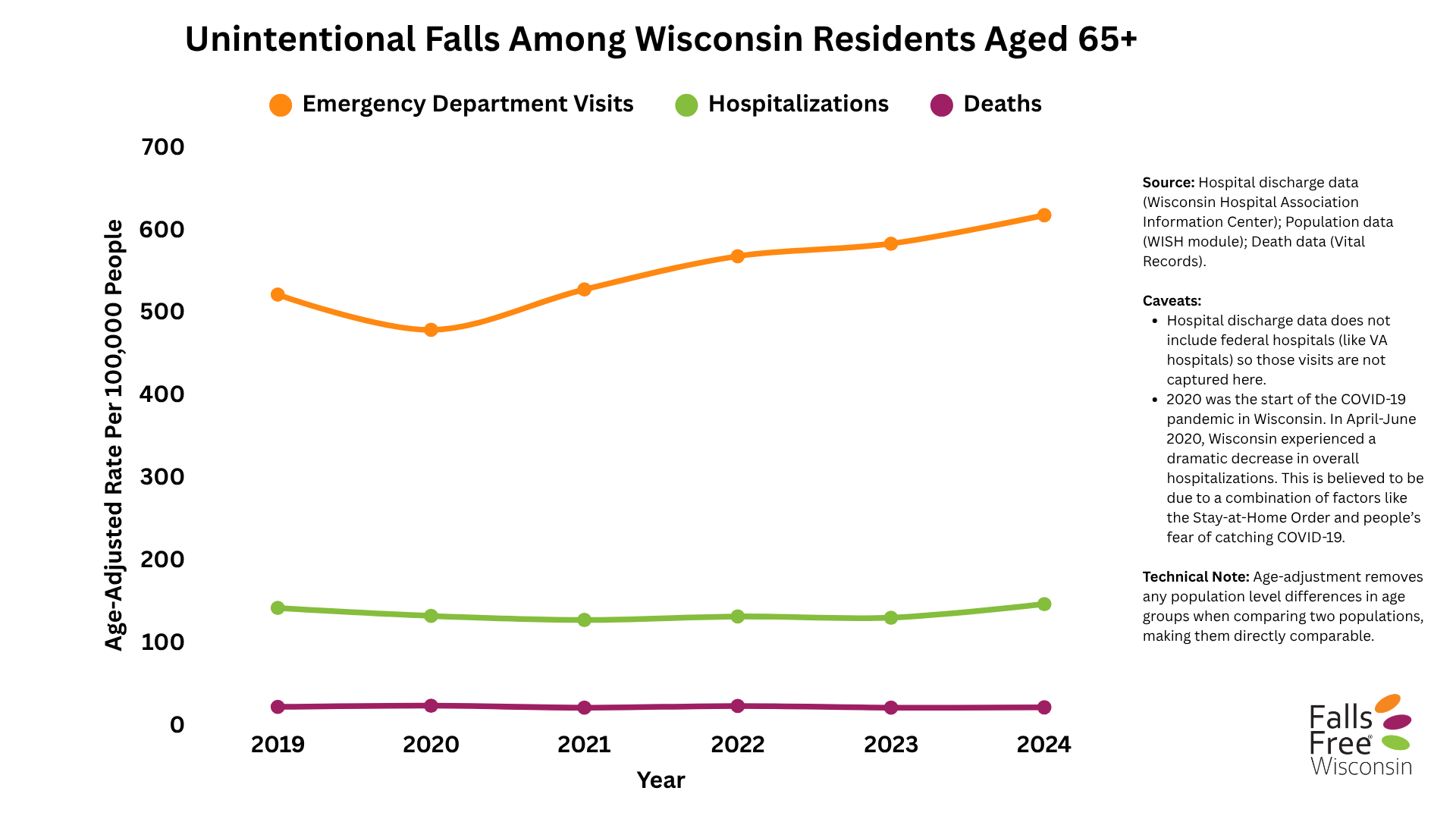
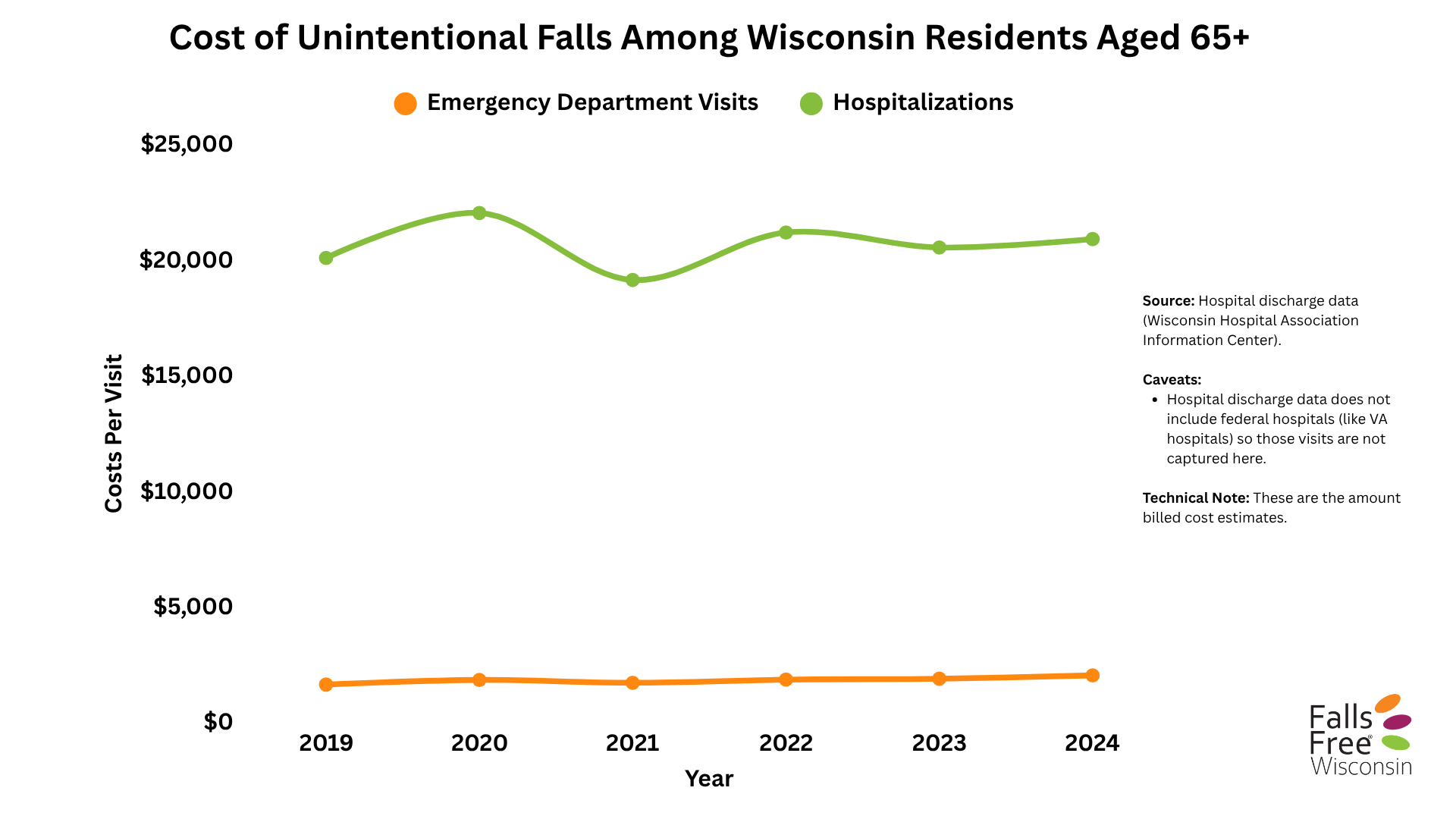
The graphs above highlight trends in unintentional fall-related emergency department visits, hospitalizations, and deaths among Wisconsin adults aged 65+ from 2019 to 2024, along with the associated costs of care. Over this time, hospitalizations and deaths have remained fairly steady, while emergency department visits have increased. This trend may suggest that more older adults are seeking care after a fall and connecting to needed resources, even if their injuries are less severe and are not fatal or don’t require hospitalization.
Not sure where to start? Watch our Falls Data 101 webinar!
View a detailed report of the above Wisconsin falls data by county.
Data on the EMS response for falls in Wisconsin.
A 2026 report and webinar on the impact of alcohol-related falls.
Accidental falls are the leading cause of traumatic brain injury in Wisconsin.
Available Data Sources:
The CDC has falls data available by state, including cost of falls, for adults aged 65 and older.
Used by ambulance service providers to enter and submit their ambulance run data. Only people with certain credentials can have access (a username and password is required to access the system). However, you can do an open records request with the State (Open Records: Wis. Stat. §§ 19.31 – 19.39 | Wisconsin Department of Health Services).
WHA has access to hospital and ambulatory surgery center discharge sets and the Wisconsin Health Information Organization (WHIO) DataMart. Health Care Data Reports are generated each year. Custom reports can be requested. There may be a charge to get this data.
Injury-related health outcomes (including unintentional falls), are one of the many health indicators that you can query on this site. You can put together your own report with the factors you want to know by year, age range, county, etc.
Contains injury information from patients presenting to local hospitals. Wisconsin Admin. Code § DHS 118.09(3) directs all hospitals, ambulance service providers and first responder services submit data on a quarterly basis. Only trauma staff from a hospital can have access (you must request a username and password for an account to access to view the data). The public can view trauma data reports here: Wisconsin Trauma Care System: Data and Reports | Wisconsin Department of Health Services.
The Wisconsin Trauma Report: 2024 Year in Review has information on the trends of traumatic injury throughout Wisconsin, with a focus on falls. All data for this report is from Wisconsin’s Trauma Registry and meets the Trauma Registry Inclusion Criteria as found in the Wisconsin State Trauma Registry Data Dictionary. Only hospitals with trauma level classifications are required to submit data to Wisconsin’s Trauma Registry.
The National Association of County and City Health Officials (NACCHO) developed this guide Using NEMSIS Data to Address Older Adult Falls at the Local Level with the National Association of State EMS Officials (NASEMSO). It provides an introduction for local health departments interested in accessing emergency medical services data to address older adult falls prevention within their communities. The guide describes the characteristics of the data that may be available to evaluate the prevalence of older adult falls that occur within their jurisdiction and to monitor data trends over time for evaluation purposes
Local Data
You may be able to get local data right from the source of your healthcare system or emergency services provider. Ask your local providers what falls data they collect. Consider requesting regular reports and monitoring for changes in trends over time.
Local/Tribal Health Departments (LTHDs) across Wisconsin are uniquely positioned to understand and address older adult falls through data-driven action. View our guide for LTHDs
Limitations of Data
Just like humans, data isn’t perfect. Each data set may have its own limitations. Be sure to look at the definitions of the data, where the numbers come from, what geographic area the numbers cover and more. Consider the effect of the COVID-19 pandemic or other factors that may have impacted the data.