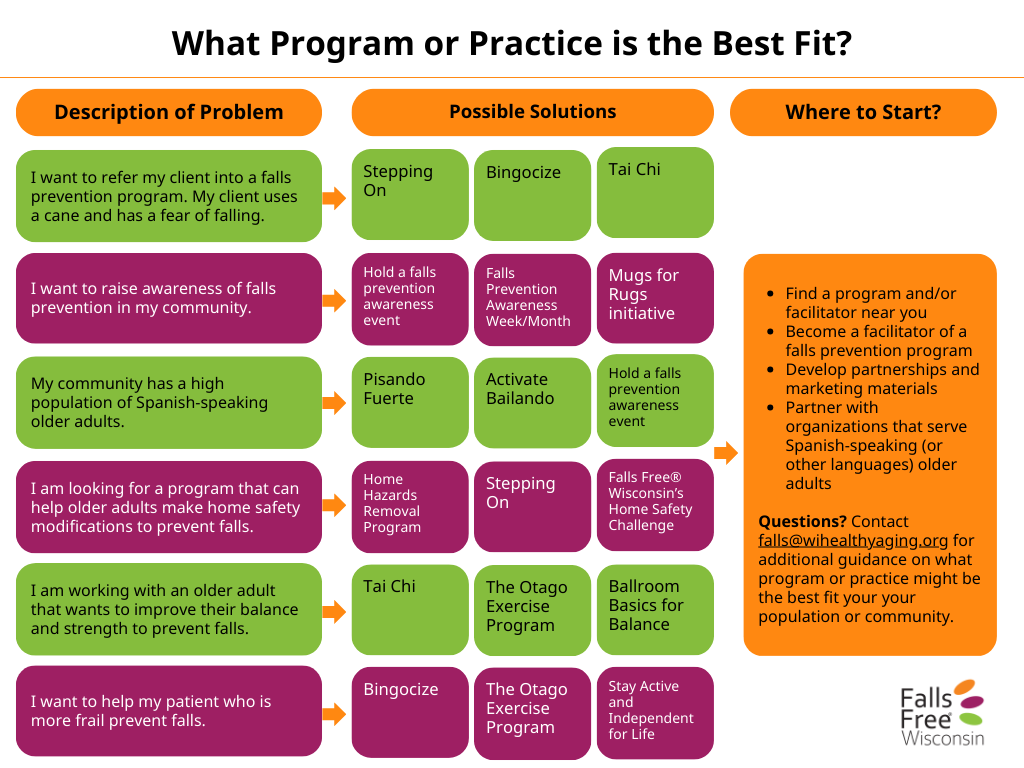

Falls are not a normal part of aging—and preventing them can start right at home! The Falls Free® Wisconsin Coalition, a statewide effort to reduce falls as we age is sharing simple, caring ways to lower falls risk as we age while supporting independence, dignity, and confidence.
Small Changes Make a Big Difference
Whether you’re an older adult thinking about your own safety or a caregiver helping someone you love, simple home changes can make a big impact. Clearing clutter from walkways, adding better lighting, securing loose rugs, and installing grab bars in areas like bathrooms are small steps that can help prevent serious falls. These changes make it easier to move safely and feel more confident at home.
Addressing Clutter and Hoarding with Care
Clutter is more than a mess—it can increase the risk of falls. For people who struggle with hoarding or too much clutter, change can feel stressful or overwhelming. That’s why it’s important to lead with patience, kindness, and respect.
Carla Alejo, Director of Hoarding Intervention and Treatment Program at Catholic Charities in Milwaukee states, “The biggest misconception is that people think that people with hoarding disorder want to live like this, that they want to have all their stuff. That’s the farthest from the truth. They don’t want to live like this. It is hard for them to imagine life without the stuff. The stuff is their safety blanket. My message is to take it slow. The disorder wasn’t created, and the house wasn’t filled up in a day. So small steps, taking small things out, making small piles to deal with and ask for help.”
It’s Okay to Ask for Help!
As Alejo stated, it’s okay to ask for help! Building falls resiliency is not something anyone has to do alone. Asking for help—from family, friends, neighbors, or professionals—is a sign of strength. Help might include changing a lightbulb, adding grab bars, using non-slip mats, or finding exercises to improve balance and strength. Caregivers, this message is for you too! Taking steps to prevent your own falls helps you stay healthy and continue caring for others.
Lean on Your Home Safety Team
Preventing falls is easier when we work together. Your home safety team might include family members, caregivers, friends, healthcare providers, neighbors, or community organizations. This team can help spot risks, make home safety changes, share helpful tools and resources, and offer support along the way.
Practice Active Listening
One of the most important parts of fall prevention is listening—really listening—to older adults and loved ones. Understanding what matters to someone helps create solutions that fit their daily life. When people feel heard, conversations about safety are more respectful, helpful, and effective.
If you have experienced a fall, you are not alone. According to the Centers for Disease Control and Prevention (CDC), more than 1 in 4 adults aged 65 and older falls each year. While falls are common, they do not have to be a normal part of aging. Small changes, teamwork, kindness toward yourself and others, and asking for help can make a big difference. Older adults, caregivers, family members, and professionals all play a role in creating safe, comfortable homes that support independence as we age.
Let’s keep the conversation—and the care—going. Visit FallsFreeWI.org to find tools and resources, like the interactive Home Safety Challenge, to help you take the next step toward safer living at home.